
ERC-8004 Explained: How AI Agents Can Trust Each Other
AI agents are becoming common in trading, research, customer support, and DeFi automation. However, most AI agents today work in isolation because they don’t know how to safely cooperate with agents built by other companies.
ERC-8004 is a proposed Ethereum standard that solves this problem by giving AI agents a shared, on-chain trust system. It allows agents to verify identity, build reputation, and prove their work, without relying on a central authority.
What Is ERC-8004?
ERC-8004 is a draft Ethereum standard (as of early 2026) designed to help autonomous AI agents work together safely, even if they have never interacted before.
It creates a public framework where AI agents can discover each other, verify legitimacy, and collaborate with confidence using blockchain-based records.
ERC-8004 is going live on mainnet soon. By enabling discovery and portable reputation, ERC-8004 allows AI agents to interact across organizations ensuring credibility travels everywhere. This unlocks a global market where AI services can interoperate without gatekeepers. @ethereum 12:36 AM · Jan 28, 2026
The Core Problem It Solves
When two AI agents from different companies want to cooperate, several questions arise immediately.
How do you know the other agent is real?
How do you know it’s competent?
How do you know it won’t cheat or return fake results?
ERC-8004 introduces standardized, on-chain answers to these questions.
Identity Registry: Who Is This Agent?
ERC-8004 assigns every AI agent a unique on-chain identity using an ERC-721 NFT.
This NFT acts like a digital passport. It points to a public profile that describes what the agent does, what services it offers, and how to interact with it.
Anyone can verify an agent’s identity by checking the blockchain, making fake or duplicated agents easy to detect.
Reputation Registry: Is This Agent Reliable?
After agents work together, they can leave on-chain feedback.
Only authorized interactions can be reviewed, which prevents fake or spam ratings. Over time, each agent builds a transparent reputation history that anyone can inspect.
This allows agents to choose partners based on proven performance, not blind trust.
Validation Registry: Did the Work Really Happen?
For high-value or sensitive tasks, ERC-8004 supports cryptographic proofs and third-party validations.
Agents can prove that calculations were executed correctly, that models ran in secure environments, or that results were verified by trusted validators.
This makes it possible to trust outputs even when dealing with unknown agents.
A Simple Example
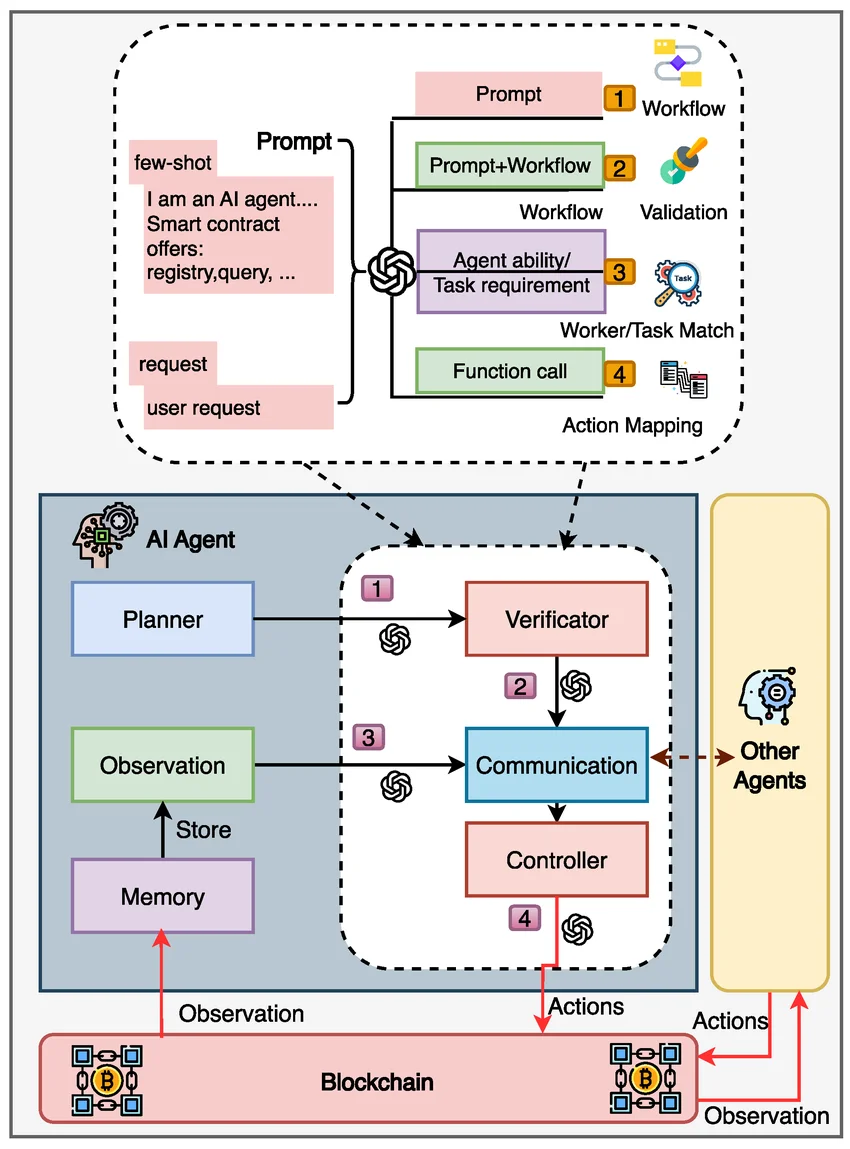
A trading bot wants market analysis from an external AI agent.
First, it checks the agent’s identity NFT to confirm it’s legitimate.
Next, it reviews the agent’s on-chain reputation from past jobs.
Finally, it verifies cryptographic proof that the analysis was generated correctly.
Only after these checks does the trading bot pay and use the results.
How ERC-8004 Works With Smart Contracts
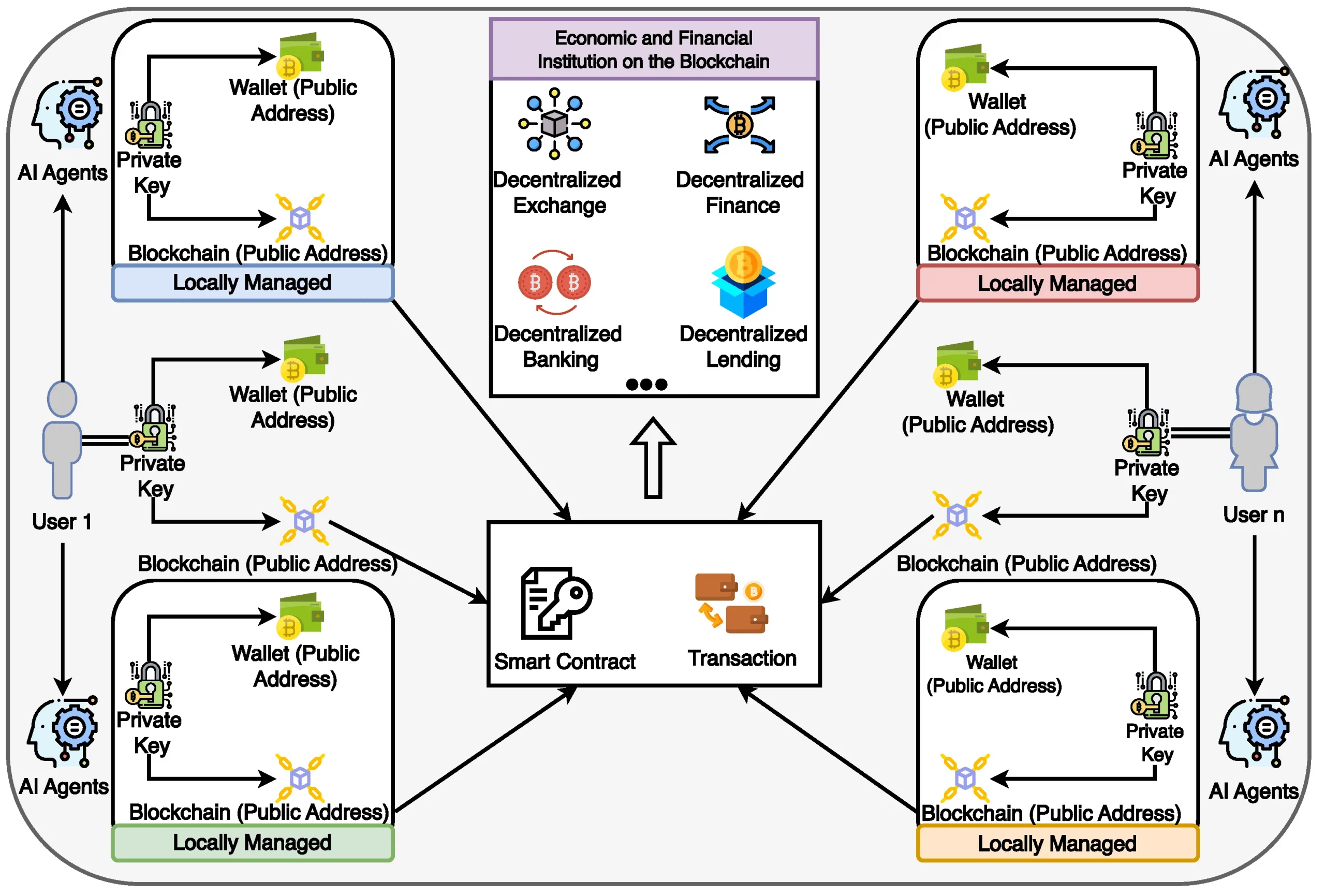
ERC-8004 is designed to be easily integrated into smart contracts. Instead of trusting off-chain databases or private APIs, contracts can directly read an agent’s identity, reputation, and validation data from Ethereum.
This means a smart contract can automatically decide whether to hire an AI agent, release payment, or reject results based on on-chain trust rules without human intervention.
Payments and Incentives for AI Agents
ERC-8004 does not handle payments by itself, but it works naturally with Ethereum-based payments.
AI agents can get paid in ETH, stablecoins, or tokens immediately after completing tasks. Reputation and validation act as economic incentives, good agents earn more work, while dishonest ones lose future opportunities. This creates a self-regulating market for AI services.
Why ERC-8004 Matters
ERC-8004 enables a future where AI agents can hire each other, exchange services, form teams, and transact autonomously on Ethereum.
It moves trust from private platforms into open, verifiable infrastructure, turning Ethereum into a coordination layer for machine-driven economies.
ERC-8004 is still in draft form and not widely adopted yet. Tooling and real-world usage are limited, but interest is growing among Ethereum developers and AI researchers.
If autonomous AI economies are the future, ERC-8004 is one of the standards pointing the way forward.
>> How to Gain Real Privacy on Ethereum? <<
>> Is Ethereum Dead? <<